
| Availability: | In stock |
Almost 6,000 years before the Roman legions carried grapevines across western Europe and established many of the great growing regions we know today, wine was already an important economic driver in eastern Europe. Archaeologists have discovered ancient amphorae and wine presses buried in the soils of the South Caucasus that show our forebears were making wine in the Neolithic period. This area encompasses present-day Georgia, Armenia, and Azerbaijan, and while there is much debate over which modern country was first, it is safe to say this region is the birthplace of modern wine. As humans evolved, they began trading wine along what became known as the Spice Route, carrying their wines all the way to India and China.
Although we in the West do not have a lot of experience with wines from this area, they are well known in eastern Europe and Asia. Under Soviet occupation the vineyards in this region swelled to nearly 316,000 acres of vines — 100,000 acres more than are currently planted in the entire U.S., excluding California. Since Gorbachev and the fall of the Soviet Union, the number has dropped to just over 120,000 acres, about the same as Oregon and Washington State combined. Production is focused on the historic grapes of the region, and many wines, like this one, are still fermented and/or aged in large terracotta amphorae called qvevri.
This wine is a rare chance to taste history, produced primarily from Georgia’s dominant red grape, Saperavi. Saperavi is an example of a teinturier variety, whose juice is also red. Almost all red grapes have clear juice, with the color extracted from the skins. Squeeze a Saperavi grape (Alicante Bouschet is another example) and the juice is almost as dark as blood and stains everything. Over the centuries, winemakers in this region have learned that aging in qvevri helps soften the tannins — but make no mistake, this is a big wine.
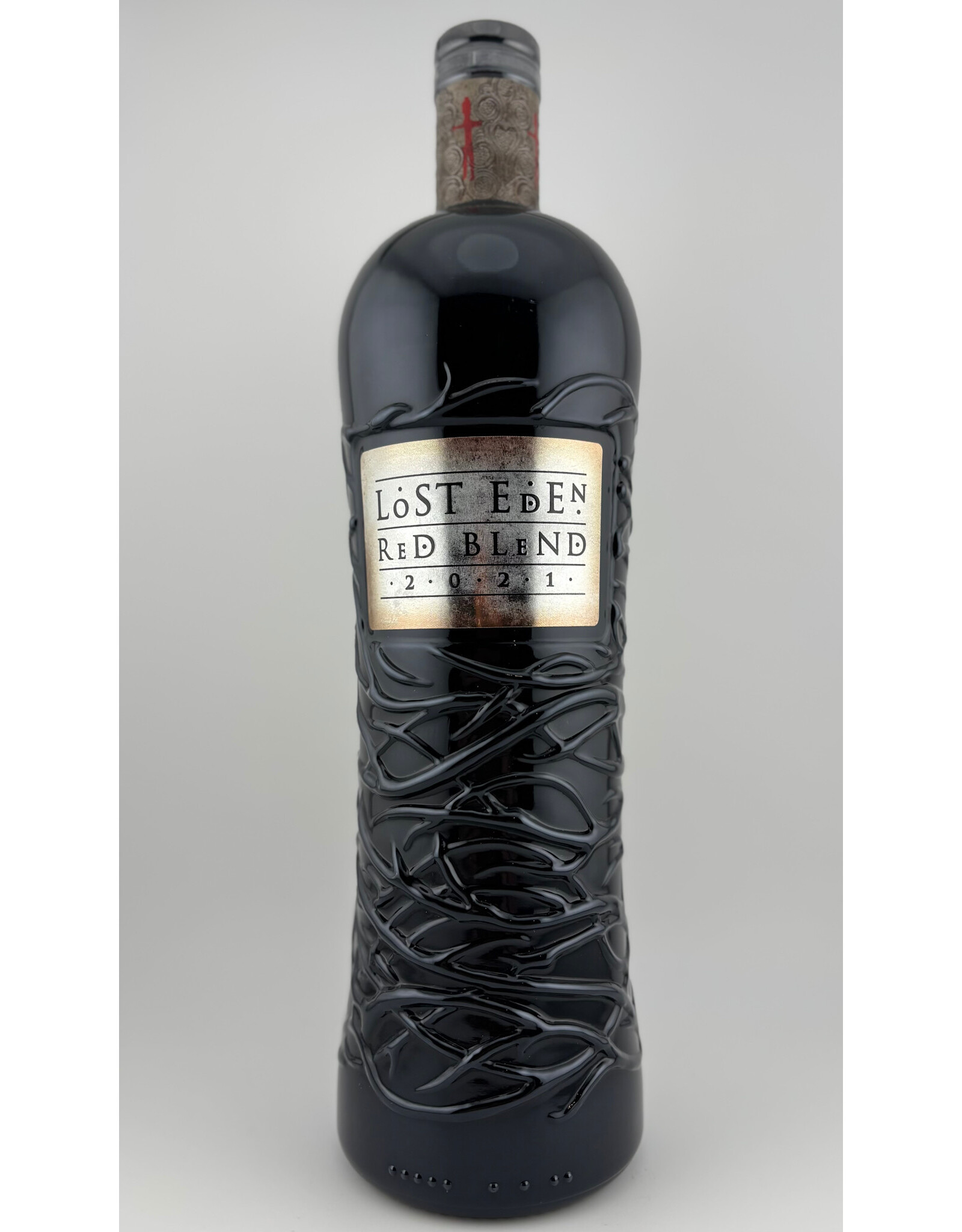
As you can tell, it is packaged in a striking bottle and closed with a glass stopper called a vinolok. Decant this wine and give it a few minutes to open up. When you swirl the glass you can see the thick color and deeply stained tears that slowly ooze down the sides. The nose is a complex mix of black currant, blackberry, Luxardo cherry, dried fig, balsamic syrup, and baking spices. The palate is rich, with tannins that rise up and provide structure into the finish. Drink this wine over the next two to three years with steak, meatloaf, or go local with lamb stew! This wine will be open all weekend, so stop in to taste.