
| Availability: | In stock |
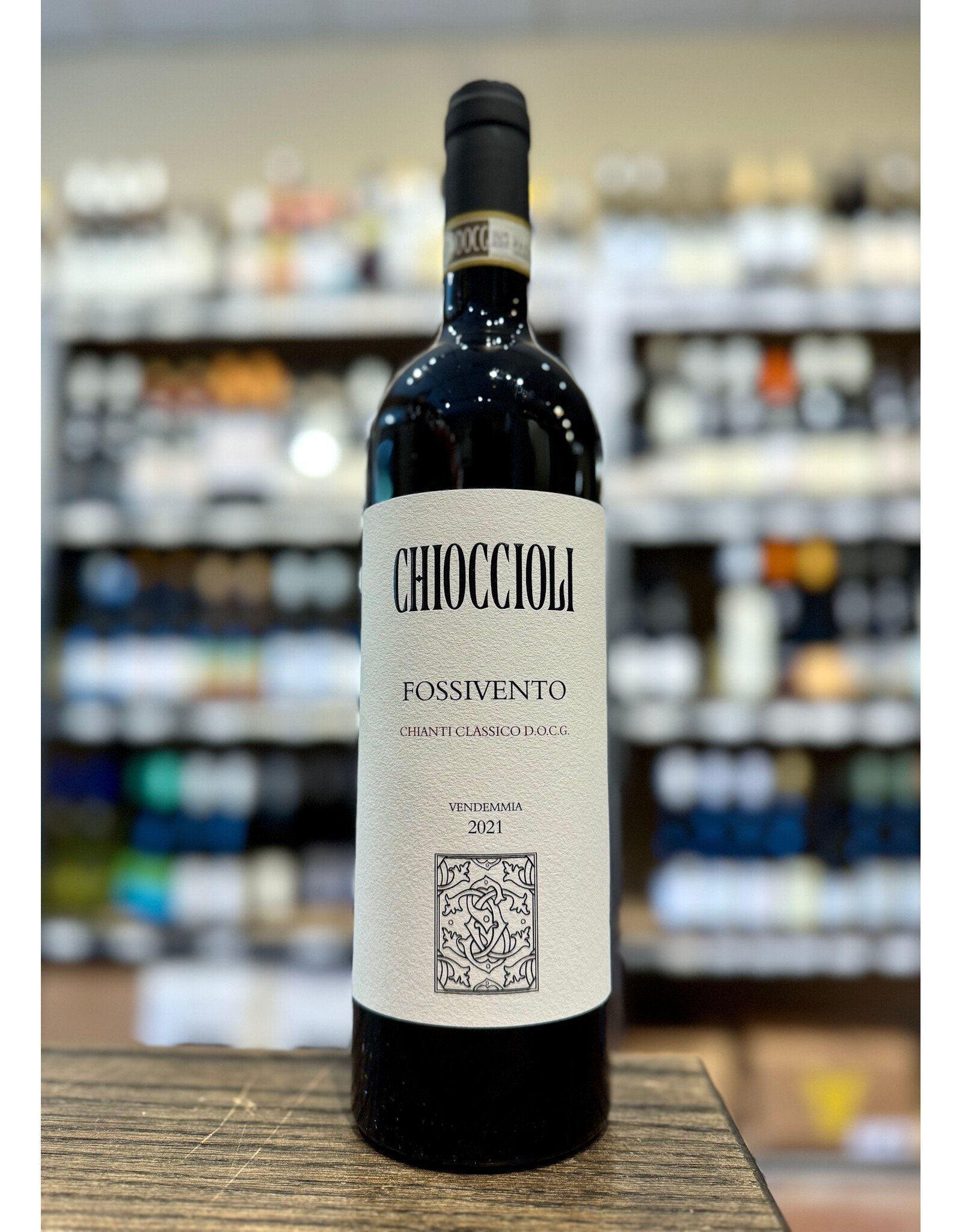
I tasted with the owner of this estate, Niccolo Chioccioli Altadonna, in late March 2024, and I was so impressed that I selected this wine as a European Reserve Club selection that August. It was very popular with our club members and later became a shelf item. Now the distributor is eager to move on to the new vintage, so he offered us a BOGO deal on the remaining 2021, which is an exceptional vintage.
While this is not an old estate, it was founded by Niccolo’s father, Stefano Chioccioli, in 2010. Although not a household name, Stefano is one of the most celebrated agronomists in the world. He established the estate by purchasing a 230-acre parcel outside the village of Greve in the heart of the Chianti Classico district. Respect for their land is important, so the family has only planted 40 acres and left the remainder as a nature preserve and a buffer for their neighbors. They planted the Fossivento vineyard using a massal selection of Sangiovese, which is important for complexity. Sangiovese is a very old variety with many subtle differences between genetic material. A massal selection involves taking random cuttings from different vines, often from divergent sources, and propagating them to create genetic biodiversity at a single site. This helps build complexity in what is essentially a mono-varietal wine.
The name of this vineyard, Fossivento, is taken from the works of a local poet and the line “if I was the wind.” It relates to the steep slope of this vineyard that is exposed to the afternoon winds, which lower the temperature and prevent the grapes from overripening. Harvest occurs a little earlier than most in the region, with the goal of retaining freshness and intensity. They sort the grapes twice in the vineyard and a third time after destemming at the winery to ensure only the healthiest grapes make it to the fermentor. A portion of this wine is fermented in large clay amphorae for 25 days on the skins, and then the wine is aged in low-toast, 500-liter French oak casks for 14 months.
Decant this wine for at least half an hour before serving and chill it to cellar temperature. Once you do, it displays a wildly complex bouquet of tart cherry preserves, cooked strawberries, black licorice, toasted pecans, and balsamic saba. On the palate, it showcases a chiseled form with a Burgundian delicacy that you do not typically find in this category. While it is very drinkable now, this wine should improve nicely, so aim to drink it between 2026 and 2030.